The dream of financial independence is often perceived as a privilege reserved for the elite, those born into wealth or those who stumble upon a once-in-a-lifetime windfall. However, the most profound reality of wealth creation is far more democratic and disciplined. It is not about the “big hit”; it is about the “small habit.” The journey of turning spare change into a multi-million dollar portfolio is a mathematical certainty governed by the laws of compounding, time, and consistency.
In a world obsessed with overnight success stories and high-risk crypto-gambling, the quiet power of incremental investing is often overlooked. Yet, history’s most successful investors, from Warren Buffett to the legendary “Janitor Millionaire” Ronald Read, built their fortunes not through complex alchemy, but through the relentless accumulation of small amounts over long horizons. This article serves as an exhaustive blueprint for anyone looking to weaponize their daily expenses and transform modest savings into a generational legacy.
The Mathematical Foundation: Why Small Amounts Matter
To understand how small change becomes millions, one must first respect the “Eighth Wonder of the World”: Compound Interest. Unlike simple interest, which only grows on your principal, compound interest grows on your principal plus the interest you’ve already earned.
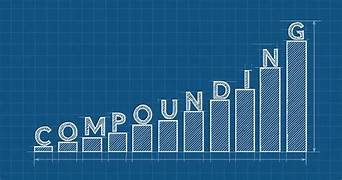
A. The Exponential Growth Curve: In the early years, the growth of small investments looks flat and discouraging. This is known as the “linear phase.” However, as the asset base grows, the interest earned begins to exceed the original contributions. Eventually, the curve turns vertical. This is the “exponential phase” where true wealth is created.
B. The Cost of Waiting: Time is the most valuable asset in the investor’s toolkit. If an individual saves $100 a month starting at age 20, assuming an 8% annual return, they would have over $500,000 by age 65. If they wait until age 30 to start that same $100 contribution, their end balance drops to roughly $230,000. Waiting ten years effectively “costs” the investor over a quarter of a million dollars.
C. The Coffee Factor: Popularized by financial author David Bach, the “Latte Factor” illustrates that redirecting $5 a day—the price of a premium coffee—into a diversified investment vehicle can result in nearly $1 million over a 40-year working career. The goal is not to eliminate joy, but to recognize the “opportunity cost” of mindless spending.
Phase One: Automating the Micro-Contribution
The greatest enemy of the retail investor is human psychology. We are wired for instant gratification. To succeed, you must remove “willpower” from the equation and replace it with “automation.”
A. Round-Up Applications: Modern fintech has revolutionized micro-investing. Applications like Acorns or Stash allow users to link their debit cards and “round up” every purchase to the nearest dollar. If you buy a sandwich for $8.40, the app automatically invests $0.60. These “invisible” contributions bypass the brain’s pain receptors associated with saving.
B. The “Pay Yourself First” Principle: Before paying rent, utilities, or the grocery bill, a portion of your income must be diverted to your investment account. Even if it is only $25 per paycheck, the psychological shift from “saving what is left” to “spending what is left after saving” is the hallmark of the millionaire mindset.
C. Micro-Savings Challenges: Engaging in “52-week challenges” (saving $1 in week one, $2 in week two, etc.) or “no-spend weekends” creates a gamified environment for wealth accumulation. The objective is to build the “muscle memory” of saving.
Phase Two: Asset Allocation and Growth Vehicles
Small change won’t reach millions if it stays in a standard savings account. With inflation hovering as a constant threat, cash is a melting ice cube. You must move your money into “productive assets.”
A. Low-Cost Index Funds: For the vast majority of investors, trying to pick individual “winner” stocks is a losing game. Index funds, such as those tracking the S&P 500, allow you to own a piece of the 500 largest companies in America. They offer instant diversification and historically return an average of 7% to 10% annually over long periods.
B. Exchange-Traded Funds (ETFs): Similar to index funds but traded like stocks, ETFs offer flexibility and extremely low expense ratios. Focusing on “Total World” or “Total Market” ETFs ensures that you are betting on the growth of the global economy rather than a single sector.
C. The Role of Dividend Reinvestment Programs (DRIPs): When you own shares in profitable companies, they often pay you a portion of their earnings as dividends. By utilizing a DRIP, those dividends are automatically used to buy more shares. This creates a feedback loop where you own more shares, which pay more dividends, which buy even more shares.
Phase Three: Tax Efficiency—The Hidden Accelerator
It is not what you earn; it is what you keep. Taxes are the single largest “drag” on investment returns. Mastering tax-advantaged accounts can shave years off your path to a million dollars.
A. Employer-Sponsored Plans (401k/403b): If your employer offers a “match” (e.g., they contribute 50 cents for every dollar you save), this is an immediate 50% return on your money. It is the closest thing to “free money” in the financial world.
B. Individual Retirement Accounts (IRAs): 1. Traditional IRA: Contributions are often tax-deductible, reducing your taxable income today. 2. Roth IRA: Contributions are made with after-tax dollars, but the growth and withdrawals in retirement are completely tax-free. For a young investor starting with small change, the Roth IRA is a powerful weapon because decades of compound growth will never be touched by the IRS.
C. Health Savings Accounts (HSAs): Often overlooked, the HSA is “triple-tax-advantaged.” Contributions are tax-deductible, growth is tax-free, and withdrawals for medical expenses are tax-free. After age 65, it can be used as a traditional IRA, making it an elite wealth-building tool.
Phase Four: Behavioral Finance and the “Vortex of Wealth”
As your “small change” starts to grow, you will encounter the “Vortex of Wealth”—the point where your money starts making more money in a single day than you do at your job. Reaching this point requires overcoming specific psychological hurdles.
A. Ignoring Market Volatility: The stock market is a “pendulum of emotion.” To turn change into millions, you must ignore the “noise” of news cycles. Market crashes are not disasters; they are “clearance sales” where your automated contributions buy more shares at lower prices.
B. Avoiding Lifestyle Creep: As your income increases, your expenses often follow. This is “lifestyle creep.” The secret to becoming a millionaire is to maintain your current standard of living while diverting 100% of your future raises and bonuses into your investment accounts.
C. The Power of Consistency (DCA): Dollar-Cost Averaging (DCA) is the practice of investing a fixed amount of money at regular intervals, regardless of the price. This removes the stress of “timing the market” and ensures that you buy more when prices are low and less when prices are high.
Phase Five: Advanced Strategies for the Small Investor
Once the foundation is set, you can explore “booster” strategies to accelerate the journey.
A. Fractional Shares: You no longer need thousands of dollars to buy expensive stocks like Amazon or Berkshire Hathaway. Most modern brokerages allow you to buy “fractional shares.” You can invest $5 into a company regardless of its share price, ensuring every cent of your “small change” is working for you immediately.
B. Real Estate Crowdfunding: For those looking for diversification outside the stock market, micro-investing platforms now allow you to buy into large-scale commercial or residential real estate projects with as little as $100. This provides exposure to property appreciation and rental income without the headache of being a landlord.
C. High-Yield Cash Management: While the bulk of your wealth should be in growth assets, your “emergency fund” or short-term savings should be in High-Yield Savings Accounts (HYSA) or Money Market Funds. In a high-interest-rate environment, even your liquid cash can earn 4% to 5% interest, contributing to the overall momentum.
The Journey of a Thousand Miles
Turning small change into millions is not a mystery; it is a discipline. It requires the humility to start small, the intelligence to automate, and the fortitude to stay the course when the world feels chaotic. The transition from a consumer to an owner is the most significant pivot a person can make in their financial life.
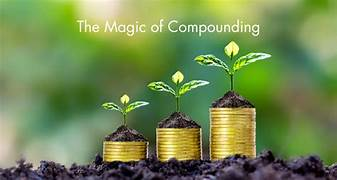
Remember that a million dollars is simply a collection of pennies that were given the time and space to grow. Your “small change” is a seed. If you plant it today, nourish it with consistency, and protect it from the elements of high fees and emotional selling, you will eventually find yourself sitting under the shade of a massive financial tree. The best time to start was twenty years ago; the second best time is today.