The concept of “making money while you sleep” has often been dismissed as a cliché or a “get-rich-quick” scheme peddled by late-night infomercials. However, in the modern global economy, passive income is not just a fantasy—it is the foundational strategy used by the world’s wealthiest individuals to decouple their earning potential from their limited time. Whether you are an aspiring entrepreneur, a corporate professional, or a seasoned investor, shifting your focus from active income to passive wealth generation is the only sustainable path to true financial independence.
Passive income is defined as earnings derived from an enterprise in which a person is not actively involved on a day-to-day basis. Unlike a traditional job, where you trade an hour of your life for a specific dollar amount, passive income involves front-loading your effort. You build a system, invest in an asset, or create a product once, and it continues to generate cash flow for months or years to come. This article provides an exhaustive, 2,000-word masterclass on the mechanisms of wealth creation, the psychology of investing, and the specific vehicles you can use to build a legacy that grows even when you are unconscious.
The Fundamental Philosophy: Active vs. Passive Income
To master wealth, one must first understand the “Income Trap.” Most people are raised to believe that the only way to earn more is to work harder or longer. This is a linear growth model: $1 \text{ hour} = \$X$. The problem with this model is that time is a finite resource. You cannot work 25 hours in a day. Therefore, your income has a hard ceiling.
Wealthy individuals operate on a non-linear model. They focus on Leverage. Leverage comes in four primary forms:
- A. Capital: Using money to make more money (Investments).
- B. Labor: Using other people’s time to build your vision (Business).
- C. Code: Using software that works 24/7 (SaaS, Apps).
- D. Media: Using content that can be consumed infinitely (Books, Blogs, Videos).
By shifting your energy from trading time to building leverage, you create assets that work for you. This transition requires a “delayed gratification” mindset, as many passive income streams require significant work upfront with zero immediate return.
Pillar 1: High-Yield Dividend Investing
One of the most time-tested methods of generating passive wealth is the stock market, specifically through dividend-paying stocks. When you own shares in a profitable company, that company often distributes a portion of its earnings to shareholders in the form of dividends.
- A. Dividend Aristocrats: These are companies in the S&P 500 that have not only paid but increased their base dividend every year for at least 25 consecutive years. Investing in these provides a sense of security and predictable growth.
- B. The Power of DRIPs: A Dividend Reinvestment Plan (DRIP) automatically uses your dividend payouts to buy more shares of the same stock. This creates a powerful compounding effect where you earn dividends on your dividends.
- C. Real Estate Investment Trusts (REITs): If you want exposure to real estate without the headache of being a landlord, REITs are essential. By law, REITs must distribute at least 90% of their taxable income to shareholders, making them high-yield powerhouses for passive income.
Pillar 2: Real Estate and Rental Properties
Real estate remains the “Great American Wealth Creator.” It offers a unique combination of cash flow, tax advantages, and appreciation.
- A. Residential Rentals: Purchasing a property and renting it to long-term tenants provides a monthly “check” that covers the mortgage and leaves a profit.
- B. Short-Term Rentals (Airbnb): While more management-intensive, short-term rentals often yield 2x to 3x the revenue of long-term leases in high-demand tourist areas.
- C. Commercial Real Estate: Investing in office spaces, warehouses, or retail strips involves “Triple Net Leases” (NNN), where the tenant pays for property taxes, insurance, and maintenance, leaving the owner with pure profit.
- D. Real Estate Crowdfunding: Platforms now allow you to pool your money with thousands of others to fund large-scale development projects for a share of the profits, requiring as little as $500 to start.
Pillar 3: The Digital Content Empire
In the age of the internet, your intellectual property can become a global 24/7 storefront. This is where “Media” leverage shines.
- A. Authority Blogging and AdSense: By creating high-value, SEO-optimized content, you attract organic traffic from search engines. Google AdSense then places ads on your site, paying you every time a visitor views or clicks. Once an article is ranked, it can generate revenue for years.
- B. Affiliate Marketing: This involves recommending products you trust. When a user clicks your link and makes a purchase, you earn a commission. High-ticket affiliate marketing can result in thousands of dollars from a single lead.
- C. Digital Products and Courses: Platforms like Teachable or Udemy allow you to package your expertise into a course. You record the videos once, and students can enroll at 3:00 AM while you sleep.
- D. YouTube Automation: Many creators build “Faceless Channels” where they hire scriptwriters and editors. The channel produces content consistently, and the owner collects the AdSense revenue without ever appearing on camera.
Pillar 4: Automated Business and SaaS
Building a business that doesn’t require your presence is the ultimate goal of the entrepreneur. This is “Code” and “Labor” leverage combined.
- A. Software as a Service (SaaS): Developing a tool that solves a specific problem (e.g., an SEO tool, a CRM, or a simple habit tracker) and charging a monthly subscription fee. Software doesn’t get tired, doesn’t complain, and can scale to millions of users instantly.
- B. E-commerce and Dropshipping: By utilizing “Third-Party Logistics” (3PL) or Amazon FBA (Fulfillment by Amazon), you can sell physical products without ever touching them. Amazon stores, packs, and ships your items, allowing you to focus purely on marketing.
- C. Vending Machines and Car Washes: These are “boring” but highly effective physical passive businesses. Once the machines are placed and the maintenance is outsourced, the cash collection is largely automated.
Pillar 5: Peer-to-Peer Lending and High-Yield Debt
Traditional banks make money by lending your deposits to others at a higher interest rate. Peer-to-Peer (P2P) lending allows you to cut out the bank and become the lender yourself.
- A. P2P Platforms: Sites like Prosper or LendingClub match investors with borrowers. You can diversify your risk by lending $25 to hundreds of different people.
- B. High-Yield Savings Accounts (HYSA): While not a “wealth builder” on its own, an HYSA is a safe place to park your emergency fund, earning 4% to 5% interest compared to the 0.01% of traditional big-box banks.
- C. Private Money Lending: If you have significant capital, you can act as a “Hard Money Lender” for real estate flippers, charging high interest rates (10-12%) for short-term loans secured by the property itself.
The Mathematical Miracle: The Power of Compounding

The “Sleep Wealth” strategy relies on the mathematical principle of compound interest. As Albert Einstein reportedly said, “Compound interest is the eighth wonder of the world. He who understands it, earns it; he who doesn’t, pays it.”
To visualize this, consider the “Penny Doubling” riddle: Would you rather have $1 million today or a penny that doubles every day for 30 days? On day 20, you would only have $5,242. It looks like a bad deal. But by day 30, that penny has grown to over $5.3 million.
Shutterstock
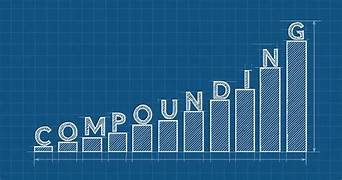
Passive income assets work the same way. In the beginning, the cash flow might be a trickle—just enough to buy a coffee. But as you reinvest that income back into the assets, the curve turns vertical.
Navigating Risks and Common Pitfalls
No investment is without risk. Generating wealth while you sleep requires you to be wide awake during the setup phase.
- A. The “Set It and Forget It” Fallacy: No asset is truly 100% passive forever. Buildings need repairs, blogs need content updates, and companies can go bankrupt. You must perform “Portfolio Maintenance” at least quarterly.
- B. Diversification vs. Di-worse-ification: While it’s important not to have all your eggs in one basket, spreading yourself too thin across ten different business models usually leads to failure in all of them. Master one stream before starting the next.
- C. Inflation Erosion: If your passive income grows at 3% but inflation is 7%, you are technically losing purchasing power. Your assets must have “Pricing Power”—the ability to raise prices or dividends to keep up with the economy.
Step-by-Step Execution Plan

If you are starting from zero, follow this chronological order to build your “Sleep Wealth” engine:
- A. Eliminate High-Interest Debt: You cannot build wealth if you are paying 20% interest on credit cards. This is “negative passive income.”
- B. Build an Emergency Fund: Save 3-6 months of expenses in a High-Yield Savings Account. This ensures you never have to liquidate your investments during a market downturn.
- C. Start a “Side Asset”: Dedicate 10 hours a week to a digital asset (Blog, YouTube, or Digital Product). This requires zero capital, only “Sweat Equity.”
- D. Invest the Surplus: Take the profits from your side asset and invest them into “Capital Assets” (Stocks, REITs, or Index Funds).
- E. Automate and Outsource: Once your asset generates consistent revenue, hire a virtual assistant or manager to handle the daily operations.
Designing Your Future
Generating wealth while you sleep is not about being lazy; it is about being highly efficient with your most precious resource: time. By building a portfolio of diverse, leveraged assets, you shift the burden of labor from your shoulders to the systems you have created.
The transition from an active earner to a passive investor is the most profound shift a person can make in their lifetime. It moves you from a state of “Survival” to a state of “Design.” Imagine a life where your mortgage, your groceries, and your travel are all paid for by assets you built years ago. That is the reality of financial freedom. The best time to start was ten years ago; the second best time is today.