The concept of financial freedom is often misunderstood as merely having a large sum of money in a bank account. In reality, true financial independence is the state where your passive income—money earned with little to no ongoing effort—exceeds your cost of living. As we move into 2026, the economic landscape has shifted significantly. We are navigating a world defined by post-inflationary adjustments, the integration of artificial intelligence into the workforce, and a highly volatile global market. Traditional “save 10%” advice is no longer sufficient. To achieve freedom today, you need a sophisticated, multi-dimensional roadmap that balances aggressive wealth accumulation with ironclad asset protection.
This guide is designed to be your definitive manual for navigating the financial complexities of 2026. We will move beyond basic budgeting to explore high-level asset allocation, the psychological barriers to wealth, and the specific technological tools that can accelerate your journey. Whether you are starting from zero or looking to optimize an existing portfolio, this roadmap provides the structural integrity needed to build a life where work is a choice, not a necessity.
The Foundations of the 2026 Financial Mindset
Before a single dollar is invested, the psychological and structural foundation must be set. In 2026, the “Middle Class Trap” is more dangerous than ever due to rising lifestyle inflation and the “subscriptionization” of every service.
A. Auditing Your Financial Baseline: You cannot reach a destination if you do not know your starting coordinates. A comprehensive audit involves calculating your net worth (assets minus liabilities) and your “Burn Rate” (monthly outflow). In the modern era, this must include an analysis of automated subscriptions and hidden “digital leaks.”
B. Redefining the Emergency Fund: The old rule of “3 to 6 months of expenses” is outdated for 2026. Given the rapid pace of industry disruption, a “Career Pivot Fund” of 9 to 12 months is the new gold standard. This provides the psychological safety to take calculated risks, such as switching to a higher-paying but more volatile sector or starting a side venture.
C. The Debt Elimination Hierarchy: Not all debt is created equal.
- Toxic Debt: High-interest credit cards and predatory loans must be eliminated using the “Avalanche Method” (paying off highest interest rates first).
- Strategic Debt: Low-interest mortgages or business loans can often be maintained if the capital can be deployed elsewhere for a higher return. However, in a 2026 high-interest environment, the threshold for “strategic” debt has narrowed.
The Multi-Pillar Investment Strategy for 2026
Diversification in 2026 goes beyond a simple 60/40 stock and bond split. To outpace modern inflation and capture growth, your portfolio must be resilient across multiple asset classes.
A. The Equity Engine: Beyond the S&P 500
While broad market index funds remain a staple, the 2026 investor looks toward “Thematic Investing.” This involves focusing on sectors poised for generational growth:
- Artificial Intelligence Infrastructure: Investing in the physical layer of AI (semiconductors, data centers, and energy providers).
- Longevity and Biotech: As the global population ages, companies solving the puzzles of aging and personalized medicine represent massive growth potential.
- Green Transition Metals: The shift toward renewable energy requires massive amounts of copper, lithium, and rare earth elements.
B. Real Estate: The Pivot to Passive Income
Direct property management is becoming less attractive for those seeking true freedom due to rising maintenance costs.
- REITs (Real Estate Investment Trusts): Allow for liquid, hands-off exposure to commercial and residential sectors.
- Fractional Ownership: Using blockchain-based platforms to own “slices” of high-yield properties in emerging markets.
- Short-Term Rental Arbitrage: A more active but highly lucrative strategy involving the management of properties for tourism, optimized by AI-driven pricing algorithms.
C. Digital Assets and Decentralized Finance (DeFi)

By 2026, digital assets have matured. They are no longer just speculative gambles but are recognized as “Digital Gold” or “Programmable Capital.”
- Bitcoin as a Macro Hedge: Positioned as a hedge against fiat currency debasement.
- Staking and Yield Farming: Using DeFi protocols to earn “interest” on digital holdings, often far exceeding traditional bank rates.
- Tokenized Real-World Assets (RWAs): Investing in traditional assets (like gold or private equity) that have been brought onto the blockchain for 24/7 liquidity.
The Mathematics of Freedom: Reaching the “Crossover Point”
The “Crossover Point” is the exact moment your investment income covers your monthly expenses. Reaching this requires an understanding of two critical formulas.
$$Sustainable Withdrawal Rate (SWR) = \frac{Annual Expenses}{0.04}$$
The “4% Rule” suggests that if you can live on 4% of your total portfolio annually, your wealth is likely to last 30+ years. However, in 2026, many experts suggest a more conservative 3.25% SWR to account for increased market volatility and longer life expectancies.
A. The Power of Compounding
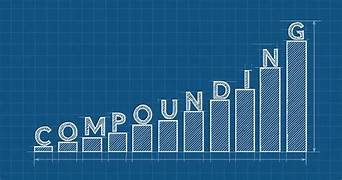
The greatest force in finance is time. An investment of $1,000 a month with an 8% return grows to nearly $1.5 million in 30 years. In 2026, the goal is to “front-load” your investments. By aggressively investing in your 20s or 30s, you allow the math of compounding to do the heavy lifting in your 40s and 50s.
B. Tax Optimization: The Silent Wealth Multiplier
It is not about how much you make, but how much you keep. In 2026, tax laws are increasingly complex.
- Maximizing Tax-Advantaged Accounts: Utilizing the modern equivalents of 401(k)s and IRAs, ensuring you capture every dollar of employer matching.
- Tax-Loss Harvesting: Using automated tools to sell losing positions to offset gains, reducing your annual tax liability.
- Asset Location Strategy: Placing high-growth (high-tax) assets in tax-exempt accounts while keeping tax-efficient assets in taxable accounts.
Modern Income Streams: The Side-Hustle Evolution
In 2026, “The Great Reshuffle” has made the single-income household a high-risk model. Financial freedom requires “Income Poly-Culture.”
A. The AI-Augmented Freelancer: Using generative AI to perform 10 hours of work in 2 hours, allowing for multiple high-ticket clients simultaneously.
B. Digital Product Ecosystems: Creating evergreen content, courses, or software that sells globally while you sleep.
C. The Passion Economy: Monetizing niche expertise through newsletters, memberships, or consulting, leveraging global platforms to find your “1,000 true fans.”
Protecting Your Fortress: Risk Management in 2026

A single lawsuit, health crisis, or market crash can derail a decade of progress. Protection is as important as accumulation.
A. Insurance as a Strategic Tool: Moving beyond basic health insurance to include disability insurance (protecting your greatest asset: your ability to earn) and umbrella liability insurance.
B. Cybersecurity for Assets: As wealth becomes increasingly digital, hardware wallets, multi-sig security, and encrypted communication are essential components of wealth management.
C. Estate Planning and Legacy: Using trusts and clear legal frameworks to ensure your wealth transitions to the next generation without being decimated by probate or inheritance taxes.
The Journey is the Destination
Financial freedom in 2026 is not a finish line; it is a lifestyle of continuous optimization and disciplined action. The roadmap is clear: audit your life, eliminate toxic debt, build a multi-pillar investment engine, and protect your gains. Most importantly, remember that money is merely a tool for time. The ultimate goal of financial independence is the ability to own your time, spend it with people you love, and pursue work that provides meaning rather than just a paycheck.
Start today. Even a small adjustment in your savings rate or a single new investment in 2026 can fundamentally alter the trajectory of your life by 2030. The future is automated, volatile, and full of opportunity—ensure you are positioned to profit from it.