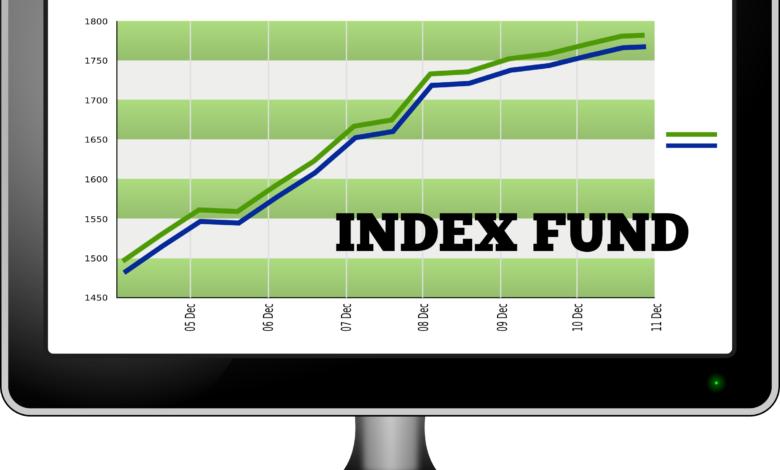
The quest for financial independence often leads investors down a rabbit hole of complex strategies, high-risk stock picking, and expensive hedge funds. However, the most successful investors in history—including the legendary Warren Buffett—frequently point to a much simpler, more consistent path to riches: the index fund. In an era of market volatility and economic uncertainty, understanding how to maximize your profits through passive investing is not just a secondary skill; it is the cornerstone of modern wealth building.
Index funds have revolutionized the financial landscape by democratizing access to the stock market. No longer do you need a team of analysts or a million-dollar brokerage account to own a piece of the world’s most profitable corporations. By shifting the focus from “beating the market” to “being the market,” investors can achieve compounding returns that outperform the vast majority of actively managed portfolios over the long term. This guide will explore the mechanics, strategies, and hidden secrets of index fund investing to help you squeeze every possible cent of profit from your portfolio.
Understanding the Mechanism: What Are Index Funds?
To maximize profits, one must first understand the machine. An index fund is a type of mutual fund or exchange-traded fund (ETF) with a portfolio constructed to match or track the components of a financial market index, such as the Standard & Poor’s 500 (S&P 500).
A. The Philosophy of Passive Management: Unlike active funds, where a highly-paid manager tries to guess which stocks will go up, an index fund simply buys everything in the index. This removes human error and emotional bias from the equation.
B. Diversification by Default: When you buy a single share of an S&P 500 index fund, you are effectively buying a small slice of 500 different companies across every major sector—tech, healthcare, energy, and retail. This diversification protects you from the total failure of any single company.
C. The Efficiency of Low Turnover: Because the fund only changes its holdings when the underlying index changes, it sells stocks much less frequently than active funds. This results in lower transaction costs and fewer taxable events for you, the investor.
The Mathematical Advantage: Why Indexing Wins
The primary reason index funds maximize profits is rooted in cold, hard mathematics. In the world of investing, you generally get what you don’t pay for.
A. The Impact of Expense Ratios: Actively managed funds often charge fees of 1% to 2% annually. Index funds, however, can cost as little as 0.03%. While a 1.5% difference sounds small, over 30 years of compounding, that fee can eat up nearly 40% of your total potential wealth.
B. The Persistence of Underperformance: Every year, reports like the SPIVA (S&P Indices Versus Active) scorecard show that over 80% to 90% of professional fund managers fail to beat the index over a 10-year or 15-year period. By choosing the index, you are choosing to outperform the “pros” simply by accepting the market average.
C. Compound Interest: The Eighth Wonder: Index funds are the perfect vehicle for compound interest. Because your costs are low, more of your money stays invested, meaning your dividends and gains earn even more money in the following year. This snowball effect is the true secret to million-dollar portfolios.
Strategic Allocation: Building Your Profit Engine
Maximizing profit requires more than just picking a random fund; it requires a strategic asset allocation tailored to your risk tolerance and time horizon.
A. The Three-Fund Portfolio: This is the gold standard for many passive investors. It consists of:
- A Total Domestic Stock Market Index: Covers your home country’s entire equity market.
- A Total International Stock Market Index: Provides exposure to growth in emerging and developed markets outside your borders.
- A Total Bond Market Index: Acts as a “shock absorber” during market crashes.
B. Age-Based Rebalancing: To maximize returns while protecting principal, you must adjust your allocation as you age. Younger investors should lean heavily toward equities (stocks) for growth, while those nearing retirement should increase their bond allocation to lock in profits and reduce volatility.
C. Sector Tilting (Optional): While pure indexing is best for most, some investors “tilt” their portfolio by adding a small percentage of sector-specific index funds (like Technology or Healthcare) if they believe those sectors will see outsized growth. However, this should be done sparingly to avoid over-concentration.
Advanced Tactics for Maximum Returns
Once the foundation is laid, these advanced maneuvers can further enhance your net profit.
A. Dividend Reinvestment Programs (DRIP): Many index funds pay dividends. By setting your account to “reinvest,” those payments are automatically used to buy more shares of the fund. This increases your share count during market dips, essentially buying more when prices are low.
B. Tax-Loss Harvesting: Even in passive investing, you can optimize for taxes. This involves selling a fund that has experienced a temporary loss to offset capital gains in other areas of your life, then immediately buying a similar (but not identical) index fund to maintain your market exposure.
C. Dollar-Cost Averaging (DCA): Trying to “time the market” is a loser’s game. To maximize profits, invest a fixed amount of money at regular intervals (e.g., every payday), regardless of the price. This ensures you buy more shares when prices are low and fewer when prices are high, resulting in a lower average cost per share over time.
D. Utilizing Tax-Advantaged Accounts: Always prioritize investing in accounts like a 401(k), 403(b), or IRA. The tax savings provided by these accounts can effectively boost your “guaranteed” return by 15% to 30% depending on your tax bracket.
Common Pitfalls That Kill Index Profits
To win, you must also know how to avoid losing. Many investors sabotage their index fund performance through psychological mistakes.
A. Emotional Panic Selling: The biggest threat to your profits isn’t a market crash; it’s you during a market crash. Selling your index funds when the market is down locks in your losses and ensures you miss the inevitable recovery.
B. Chasing Last Year’s Winner: Many investors look at a list of index funds and pick the one with the highest return from the previous year. Markets are cyclical; last year’s top-performing sector is often next year’s laggard. Stick to broad, total-market indices for consistency.
C. High-Cost “Index” Funds: Not all index funds are cheap. Some insurance companies or old-school banks offer index funds with “wrap fees” or sales loads. Always check the Net Expense Ratio before buying. If it’s over 0.20% for a standard S&P 500 fund, you are being overcharged.
The Global Perspective: International Indexing
A truly maximized portfolio looks beyond the borders of a single country. While the US market has dominated recently, historical data shows that international markets often take turns leading the way.
A. Developed Markets: Investing in stable economies like the UK, Japan, and Germany provides a safety net and exposure to world-class brands that aren’t listed on US exchanges.
B. Emerging Markets: Countries like India, Brazil, and Vietnam offer higher growth potential. While more volatile, an index fund tracking these regions allows you to capture the “middle-class explosion” in developing nations.
C. Currency Diversification: Owning international index funds means your wealth is held in various currencies. If your home currency devalues, your international holdings can serve as a hedge, maintaining your global purchasing power.
Consistency is the Ultimate Multiplier
Maximizing profits with index funds is not a sprint; it is a marathon fueled by discipline and time. The “secret” is that there is no secret—just the relentless application of low fees, broad diversification, and the refusal to let emotions dictate your financial decisions. By automating your investments, minimizing your tax footprint, and keeping your costs near zero, you are statistically likely to end up wealthier than the vast majority of active traders.
The market will fluctuate. Predictions will fail. But the collective growth of the world’s greatest companies is a historical constant. Position yourself to capture that growth, stay the course, and let the power of the index work for you.