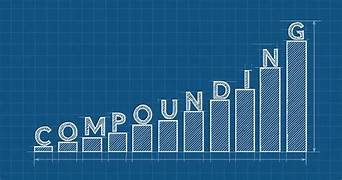
The concept of wealth creation is often shrouded in mystery, buried under complex jargon and volatile market predictions. However, the most potent weapon in any investor’s arsenal is not a secret algorithm or insider information; it is a mathematical phenomenon that Albert Einstein famously dubbed “the eighth wonder of the world.” This phenomenon is compound interest. While the formula itself is simple, mastering its application requires a profound shift in mindset—from seeking instant gratification to embracing long-term discipline.
Compound interest is the process where the value of an investment increases because the earnings on an investment, both capital gains and interest, earn interest as time passes. It is “interest on interest,” and over long periods, it possesses the power to turn modest savings into a staggering fortune. In today’s economic climate, where inflation erodes purchasing power and traditional pension schemes are under pressure, understanding and harnessing the power of compounding is no longer optional; it is the cornerstone of modern financial survival and prosperity.
This comprehensive guide is designed to take you beyond the basic definition. We will dissect the mechanics of wealth accumulation, explore the psychological barriers that prevent people from starting, and provide a strategic roadmap for maximizing your returns. Whether you are a young professional just starting your journey or an experienced investor looking to optimize your portfolio, this deep dive into the art of compounding will provide the clarity and actionable insights needed to secure your financial future.
The Mechanics of Exponential Growth
To master compound interest, one must first appreciate the staggering difference between linear growth and exponential growth. Linear growth (simple interest) is like walking—each step is the same size. Exponential growth (compound interest) is like a snowball rolling down a mountain; it starts small, but as it gathers more snow, it grows faster and larger with every rotation.
A. The Simple Interest Trap: Simple interest is calculated only on the principal amount of a loan or deposit. If you invest $10,000 at a 10% simple interest rate, you earn $1,000 every year. After 30 years, you have $40,000. It is predictable, but it lacks the “engine” of growth required for true wealth creation.
B. The Compounding Advantage: In contrast, compound interest calculates returns on the principal plus the accumulated interest from previous periods. Using the same $10,000 at 10% compounded annually, after the first year, you have $11,000. In the second year, you earn 10% on $11,000 ($1,100), bringing your total to $12,100. By year 30, that same $10,000 has ballooned to over $174,000. The difference—$134,000—is the “miracle” of compounding.
C. The Frequency of Compounding: The “magic” is further amplified by how often the interest is calculated. Compounding can occur annually, semi-annually, quarterly, monthly, or even daily. The more frequently interest is compounded, the higher the effective yield. For high-yield savings accounts or dividend-reinvesting stocks, daily or monthly compounding can significantly accelerate the growth curve over several decades.
The Three Pillars of Compounding Success
While the math is objective, the results are influenced by three critical variables. Mastering the art of compounding involves optimizing these three pillars.
I. The Time Horizon: Your Greatest Asset
In the world of compounding, time is more valuable than money. The “hockey stick” curve of exponential growth only kicks into high gear in the later years. This is why starting early is the single most important decision an investor can make.
- The Cost of Delay: Consider two investors, Alex and Blake. Alex starts investing $500 a month at age 25. Blake waits until age 35 to start investing the same amount. Assuming a 7% annual return, by age 65, Alex will have approximately $560,000. Blake, despite only starting ten years later, will have roughly $260,000. Alex’s ten-year head start resulted in more than double the wealth, illustrating that you can never “make up” for lost time with higher contributions alone.
- The Power of Longevity: Compounding rewards those who stay in the game. The goal is to avoid interrupting the compounding process unnecessarily. Every time you withdraw funds or “sit out” of the market during a downturn, you reset the clock on your exponential growth.
II. The Rate of Return: The Speed of the Engine
While you cannot control the stock market, you can control your asset allocation. The rate of return (interest rate) determines the slope of your growth curve.
- Beating Inflation: Real wealth is measured by purchasing power. If your savings account offers 1% interest but inflation is at 3%, you are technically losing money. To harness compounding, you must seek assets—such as equities, real estate, or diversified index funds—that historically offer returns significantly above the inflation rate.
- The Rule of 72: This is a quick mental shortcut to estimate how long it will take for your money to double. Divide 72 by your expected annual interest rate. At a 6% return, your money doubles every 12 years ($72 / 6 = 12$). At a 12% return, it doubles every 6 years. Small increases in your rate of return can lead to massive differences in final wealth.
III. Consistency: The Fuel for the Journey
Compounding works best when you consistently add “fuel” to the fire. This is where Dollar-Cost Averaging (DCA) becomes a vital strategy. By investing a fixed amount regularly (e.g., every month), you buy more shares when prices are low and fewer when prices are high. This discipline ensures that the principal being compounded is always growing, regardless of short-term market volatility.
Strategic Applications for Modern Investors
How do you translate these mathematical concepts into a real-world financial plan? Here are the primary vehicles for mastering compounding.
A. Dividend Reinvestment Programs (DRIPs): When you own stocks that pay dividends, you have two choices: take the cash or reinvest it. By choosing to reinvest (often automated via a DRIP), you use your earnings to buy more shares, which in turn generate more dividends. This creates a powerful feedback loop that can turn a modest dividend yield into a massive equity position over time.
B. Tax-Advantaged Retirement Accounts: Taxes are one of the biggest “leaks” in the compounding bucket. Utilizing accounts like a 401(k), 403(b), or IRAs (Individual Retirement Accounts) allows your money to grow tax-deferred or tax-free. When the government isn’t taking a percentage of your gains every year, the full amount remains in the account to compound. Over 30 years, the difference between a taxable account and a tax-advantaged account can be hundreds of thousands of dollars.
C. High-Yield Savings and Money Market Accounts: For your emergency fund or short-term goals, choose accounts that compound interest daily or monthly. While the rates are lower than the stock market, the lack of risk and the benefit of frequent compounding make them essential for preserving capital.
D. Automated Contributions: The biggest enemy of compounding is human emotion. We tend to stop investing when markets are scary and over-invest when they are bubbly. Automating your contributions removes the “decision fatigue” and ensures that the compounding process continues uninterrupted through all market cycles.
Psychological Barriers: Why Most Fail
If the math of compound interest is so compelling, why isn’t everyone wealthy? The barriers are primarily psychological and behavioral.
- A. The Lack of Visual Progress: In the early stages of compounding, the growth feels agonizingly slow. If you save $100 and it grows to $107, it doesn’t feel life-changing. Most people give up in these “boring” early years before the curve starts to turn upward.
- B. The Allure of Market Timing: Many investors try to “beat the market” by jumping in and out. Not only is this rarely successful, but it also triggers capital gains taxes and transaction fees, both of which are “friction” that slows down the compounding engine.
- C. Lifestyle Creep: As people earn more, they often spend more. By inflating their lifestyle instead of their investments, they miss the opportunity to increase the “fuel” (principal) that drives their compounding.
The Dark Side: When Compounding Works Against You

It is vital to remember that compounding is a neutral force; it works just as effectively for debt as it does for investments. Credit card debt is the most common example of negative compounding. With interest rates often exceeding 20% and compounding daily, a small balance can quickly spiral into an insurmountable financial burden. Mastering the art of compounding requires first eliminating high-interest debt so that the “eighth wonder of the world” is working for you, not against you.
Your Financial Legacy Starts Today
The art of mastering compound interest is not about being a math genius; it is about being a disciplined visionary. It requires the maturity to prioritize your future self over current desires. By starting today—no matter how small the amount—you are initiating a process that will gain momentum every single day you remain invested.
The path to wealth is rarely found in “get-rich-quick” schemes or high-stakes gambling. It is found in the quiet, relentless, and exponential power of time and consistency. As the old proverb suggests: “The best time to plant a tree was 20 years ago. The second best time is now.” The same applies to your investments. Harness the miracle of compounding, stay the course, and let time do the heavy lifting for your financial freedom.